Founding issue / October 16, 2026 Numero fondateur / 16 octobre 2026 Grunnutgave / 16. oktober 2026 Observant, civic, place-aware. Observateur, civique, attentif au lieu. Observant, samfunnsbevisst og stedsnart.
Section 09 / Norway Section 09 / Norvege Seksjon 09 / Norge Jazz desk / machine room / family archive / pataphysical bulletin Cahier jazz / salle des machines / archive familiale / bulletin pataphysique Jazzdesk / maskinrom / familiearkiv / pataphysisk bulletin
The interface changes language first. Long-form features stay in their original edition until translated. L'interface change de langue d'abord. Les longs articles restent dans leur edition d'origine pour l'instant. Grensesnittet skifter sprak forst. Langartiklene blir staende i originalutgaven til de er oversatt.
Family life, fathers, immigration, and the long Norwegian argument over Article 8. Vie familiale, pères, immigration et le long débat norvégien sur l'Article 8. Familieliv, fedre, immigrasjon og den lange norske debatten om artikkel 8.
This month's Norway feature sits where advocacy, rights language, and lived family conflict meet: Do Better Norge's campaign line, fathers' rights groups, immigrant-family anxiety, and the official Strasbourg record against Norway. Le dossier de ce mois sur la Norvège se situe à l'intersection du plaidoyer, du langage des droits et des conflits familiaux vécus : la campagne de Do Better Norge, les groupes de défense des droits des pères, l'anxiété des familles immigrées et le dossier officiel de Strasbourg contre la Norvège. Denne månedens Norge-artikkel befinner seg der aktivisme, rettighetsspråk og levde familiekonflikter møtes: Do Better Norges kampanjelinje, fedres rettighetsgrupper, immigrantfamilienes uro og den offisielle Strasbourg-protokollen mot Norge.
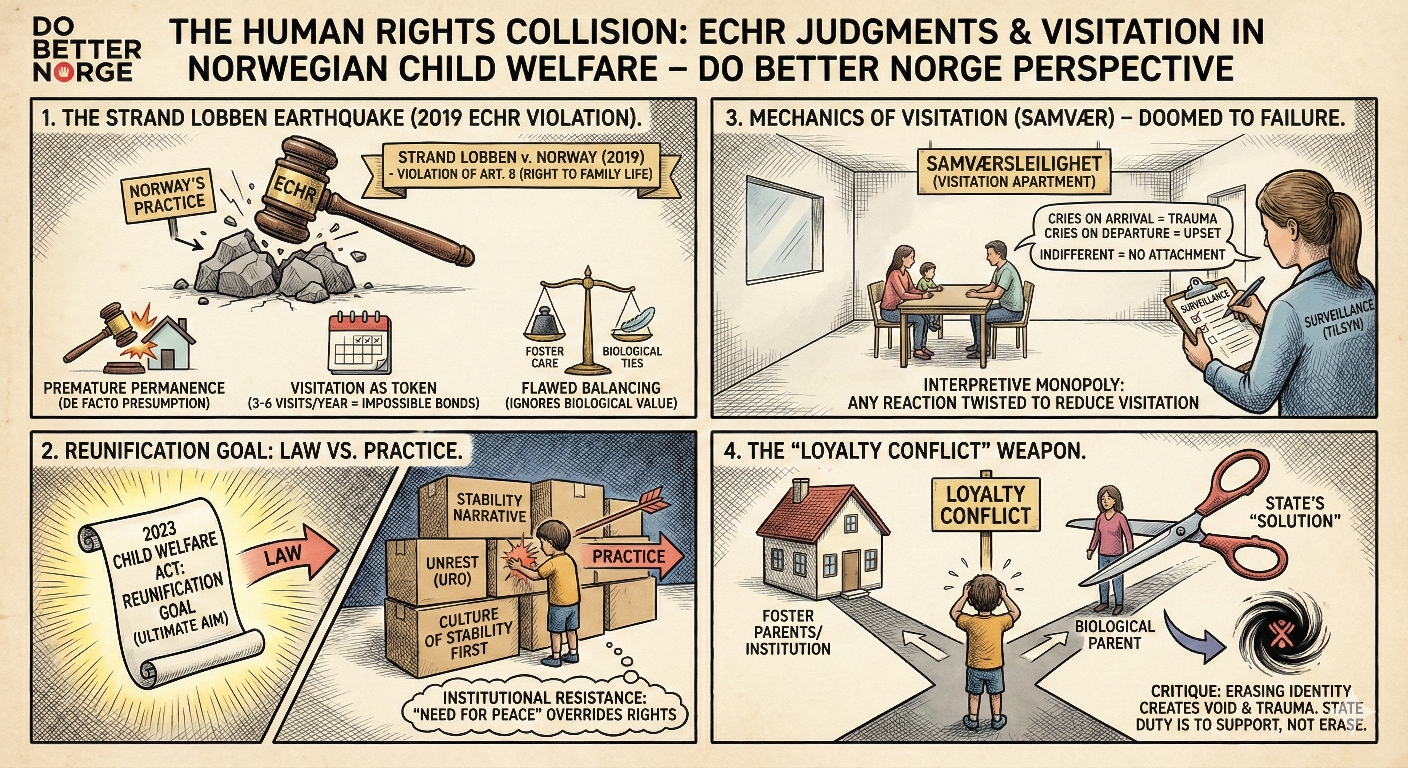
Useful for the article's law-versus-practice section because it visualizes the reunification versus stability conflict directly.
Field noteFamily life / fathers / immigrants
This Norway desk feature is built around one simple distinction. The advocacy layer comes
from groups such as Do Better Norge, MannsForum, and F2F, each of which argues that
Norwegian systems can sideline fathers, devalue contact, and mishandle immigrant-family
realities. The legal layer comes from Strasbourg, where the European Court of Human Rights
has repeatedly examined Norway under Article 8.
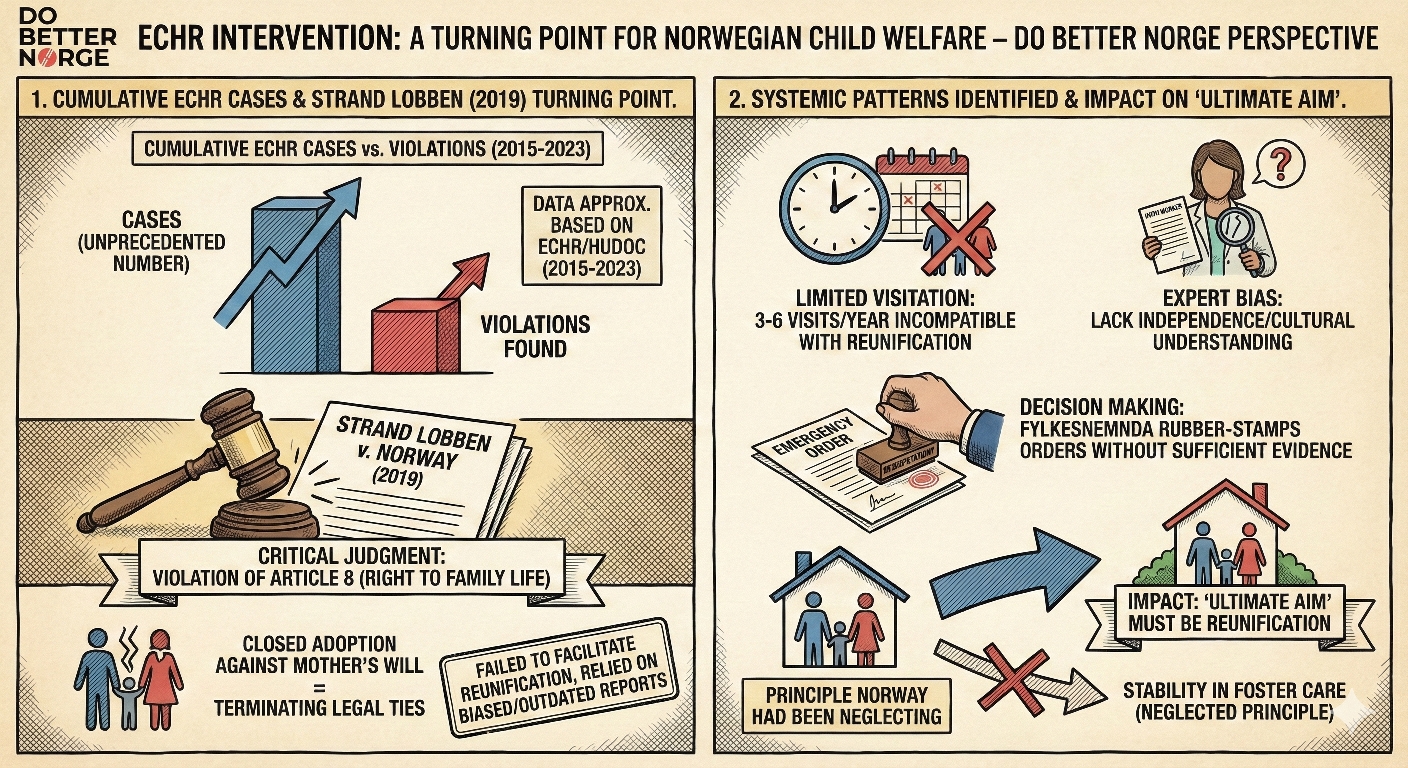
The resulting picture is not a slogan. It is a pattern. The Court has not said every
Norwegian intervention is unlawful, and it has also declared some applications
inadmissible or found no violation in some placements. But the official record still shows
a long-running family-life problem serious enough to deserve a proper desk, not just a
sidebar.
This desk separates advocacy framing from court material. Rights-group positions are
credited to the organizations themselves, while the legal analysis is anchored to official
ECHR sources.